
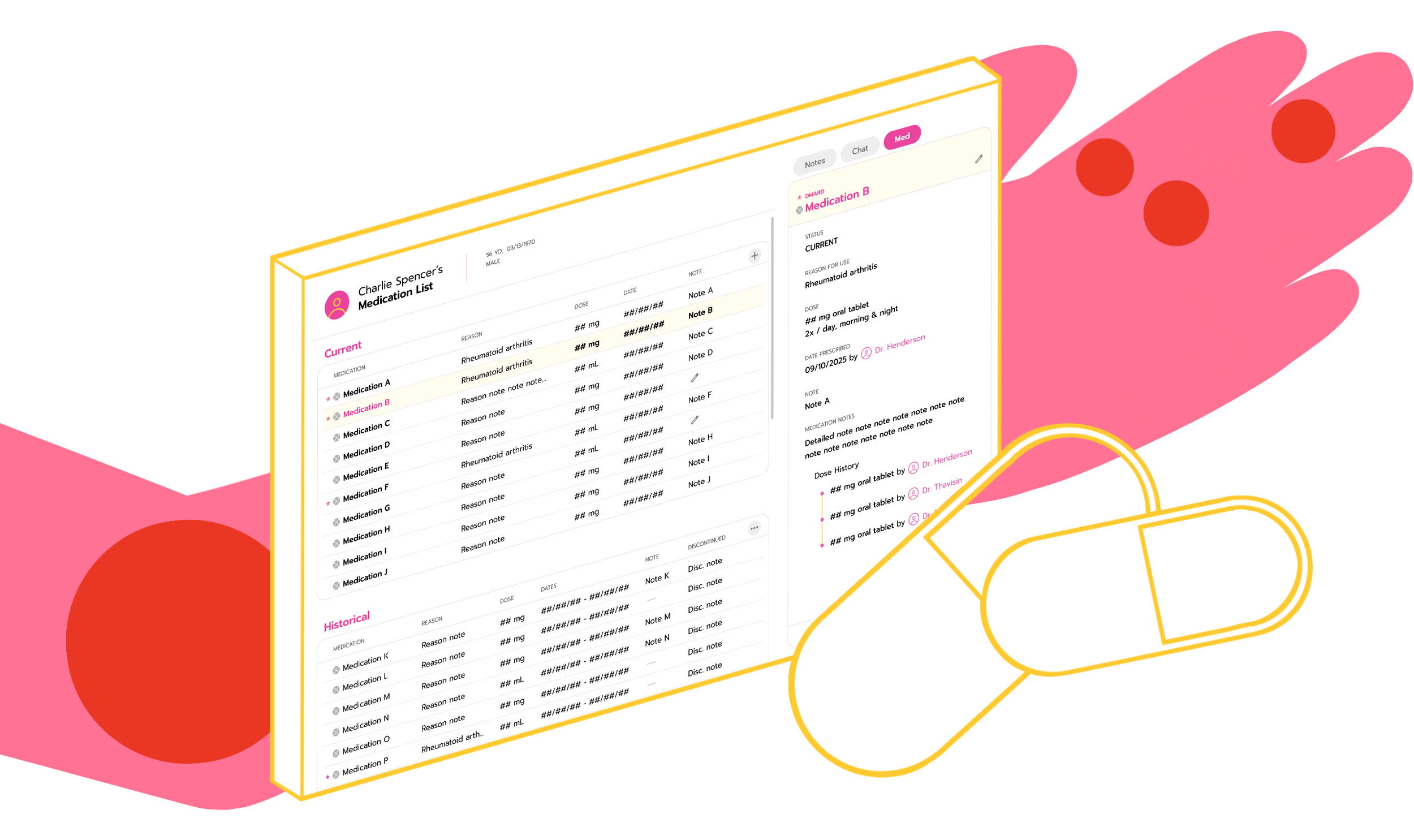
DMARDs Tracker
A new medication review tool for easy tracking of DMARDs (Disease-Modifying Antirheumatic Drugs) | @Epic
Role
Lead Designer: End-to-End UX / UI
Timeframe
Jan 2023 - Jan 2024
Tools
Adobe Xd | Microsoft Forms / Powerpoint / Word
NDA Protected
•
NDA Protected •
Due to the NDA, I can not show in-depth details or visuals from this project.
Instead, I will provide an overview for context, focusing on the process and outcomes, and simple generalized mockups.
Project overview
The problem
Rheumatologists keep track of their patient’s DMARD (Disease-Modifying Antirheumatic Drugs) usage by digging through their medication notes, usually hand-written, asking around the clinic, and reaching out to their patient’s previous providers.
This process can be time-consuming and complicated, and depending on how the medications were documented, can confusing.
Our solution
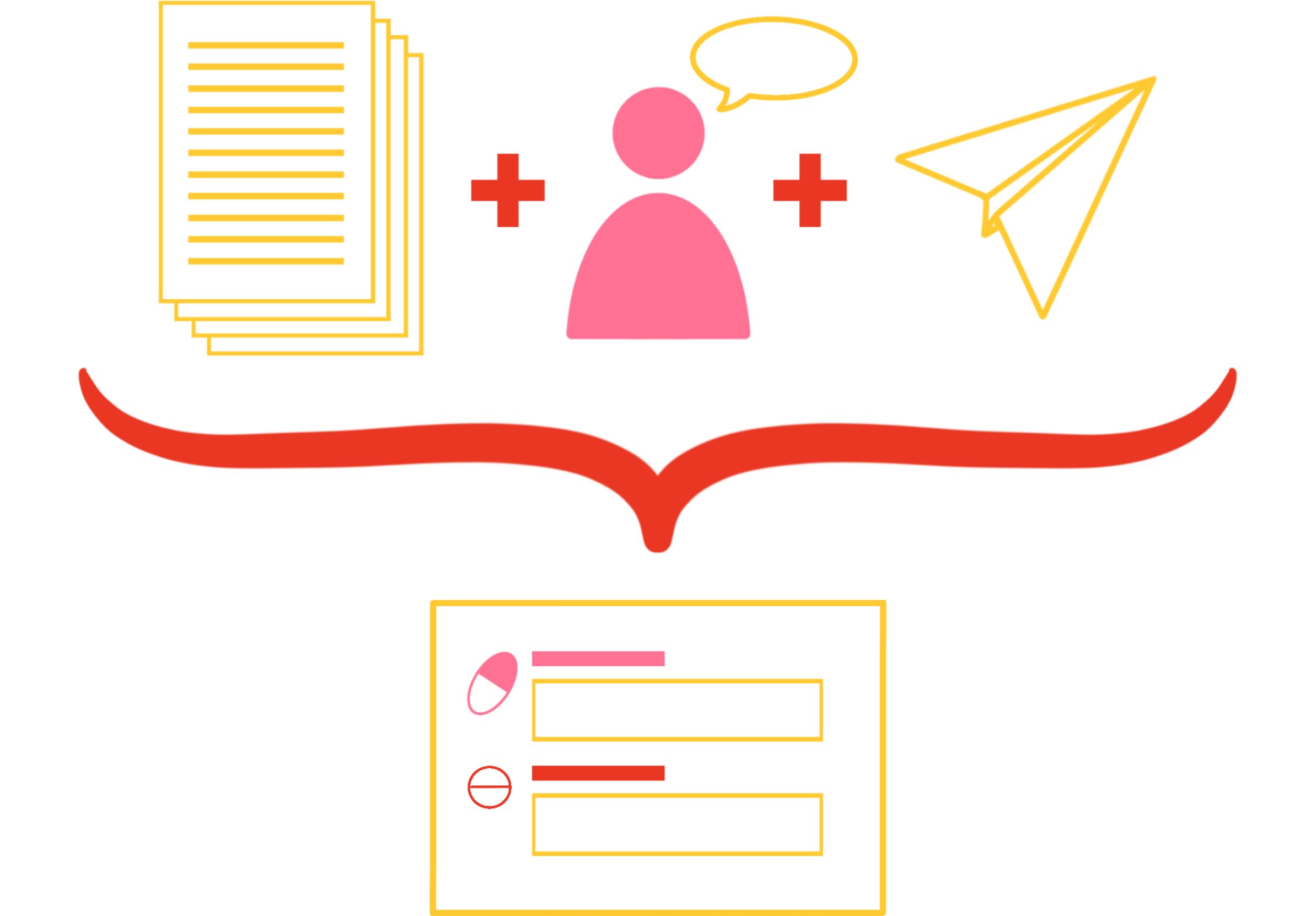
A new review activity with the following features:
easily track and edit current and historic DMARDs with content on other medications taken concurrently
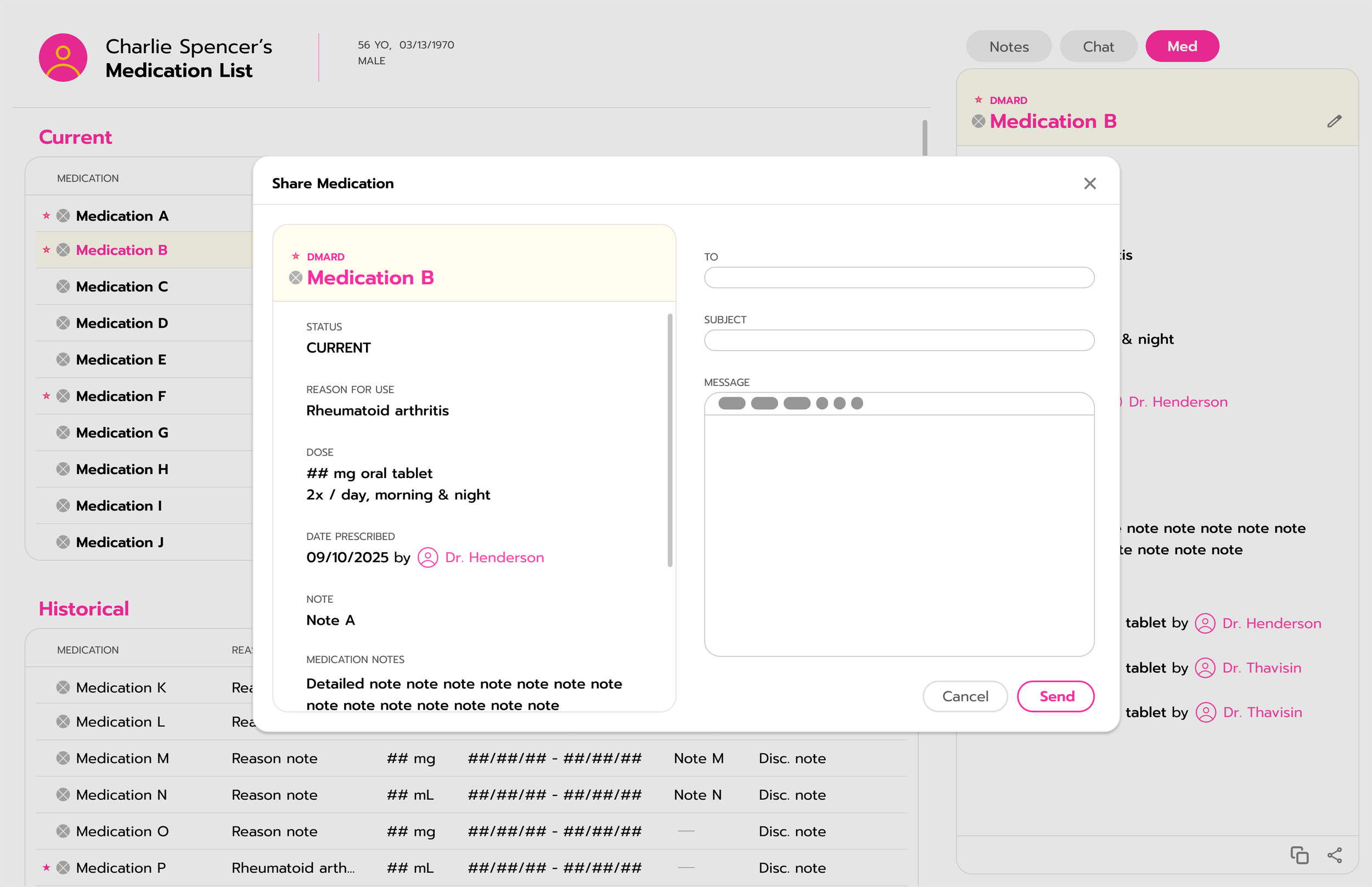
ability to quickly contact other providers regarding medications
The process
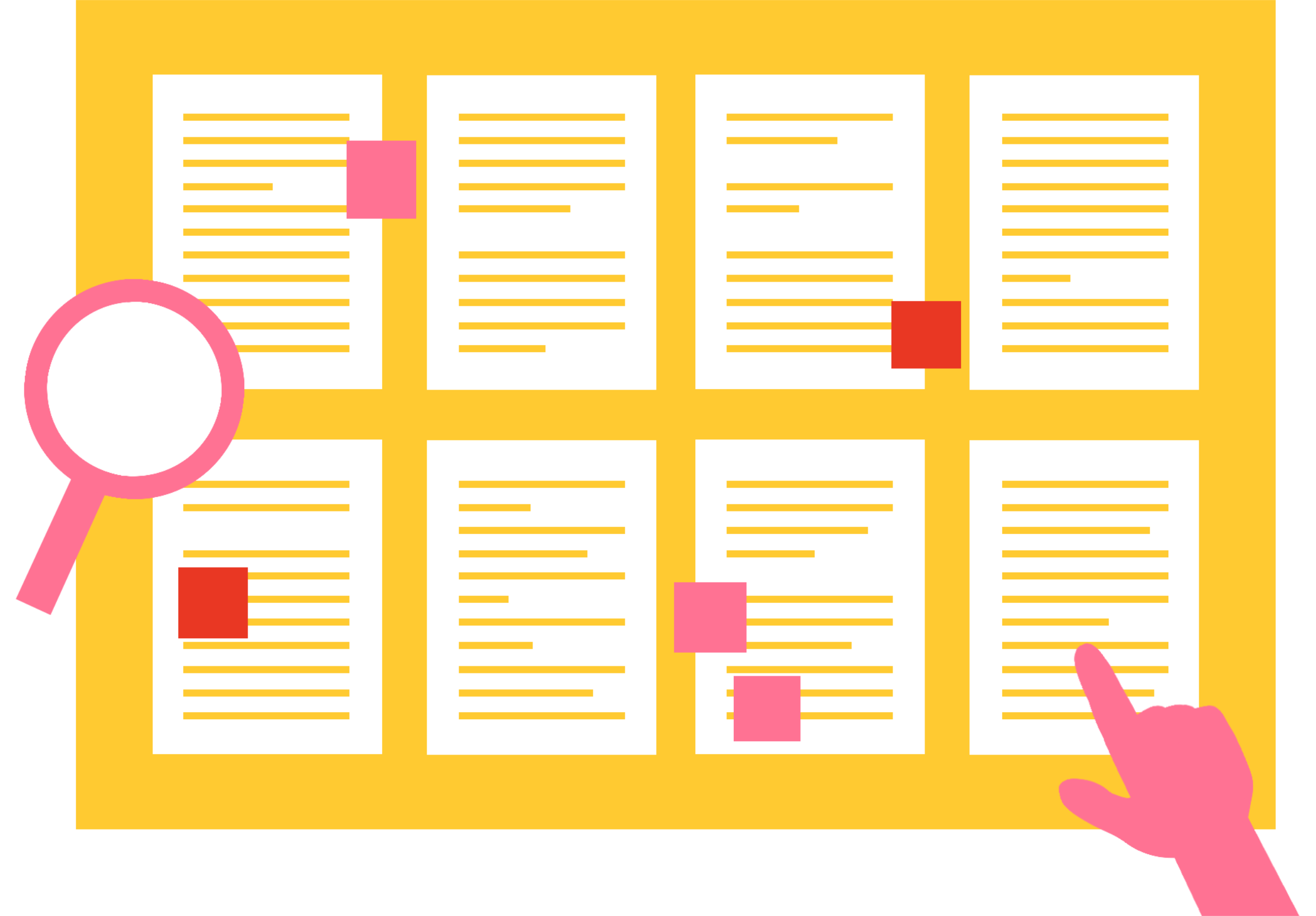
Research - collecting and organizing
Initially, the project began in 2022 but was paused until it was handed to me and a developer in 2023. With the past research content, we organized the information and contacted those involved in the past for more insight.
From there, we looked for patterns and eventually got a solid base idea of our users’ workflows, pain points, needs, and wants. Since our end-users have known this project since 2022, we decide to create basic mockups based on the findings to show a step in progress to our users and to increase interest for more user involvement to further our research.
Initial design and user interviews
Due to a number of system constraints at the time, we decided to create mock-up designs without boundaries for an “ideal” design (Version A) of what the activity can become in the future. This was intentionally done to better understand what exactly our users wanted by not worrying what was possible or not, and to help future development for improving the activity.
While brainstorming various layouts, we focused on the following main needs taken from past research:
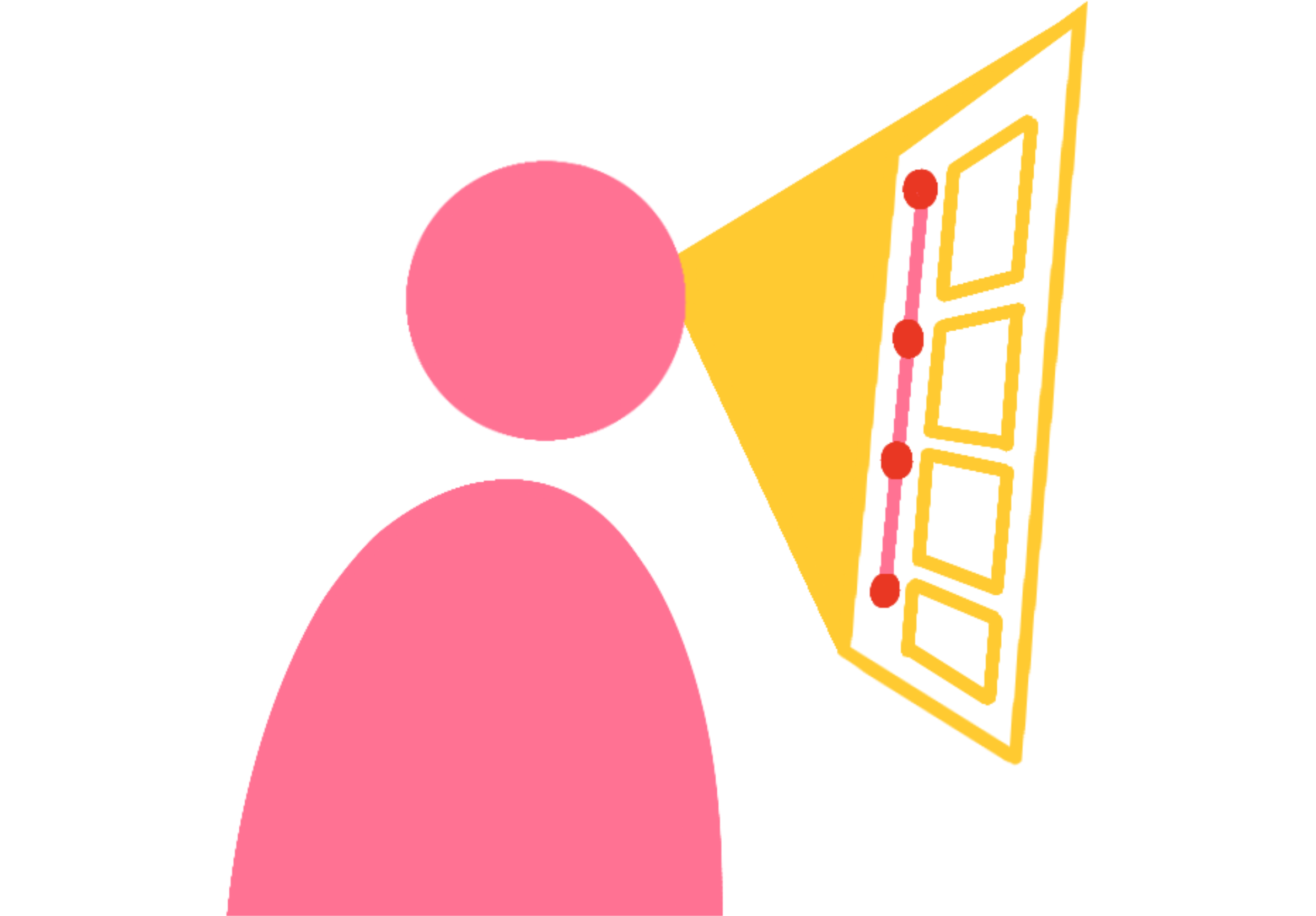
quickly track usage of DMARDs
with other medications
ability to view more detailed content
(ex. medication notes)
easy to maintain (edit ability)
Once the mockups were created, we contacted providers and others interested in the activity from various organizations for feedback. From the user interviews:
reaction was positive and motivating - word spread and users began contacting us to be involved
most feedback was discussed over:
ways to simplify the main view - utilizing content on hover / hiding certain info
ranking of relevant information to solidify how visible and accessible they should be on the activity
an edited Version A
a newly designed Version B that functions like Version A but followed current constraints
Working towards the final design
With the new feedback, we then had two designs:


Luckily, the main differences between the two designs were aesthetics and ease of editing. During this stage, we kept close contact with Epic’s medications team to see what was possible in our system and improved.
With 2 versions of the design, we continued to do user testing and gather feedback to ensure both versions met expectations and addressed pain points. A prototype of Version B was also made to see how our users interacted with the activity first-hand and to check if the activity’s location in our system flowed naturally with their workflow.
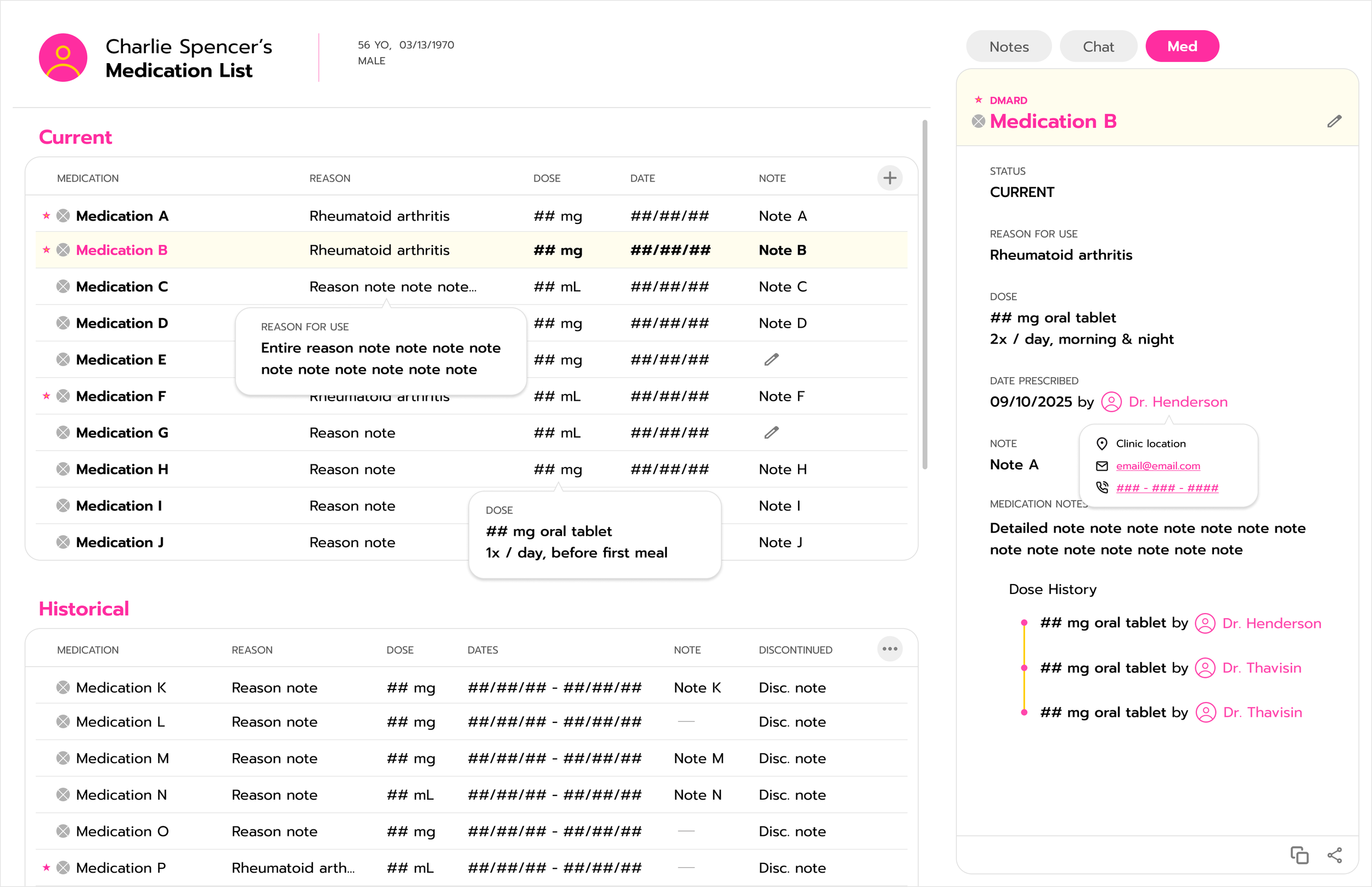
Generalized Mockups
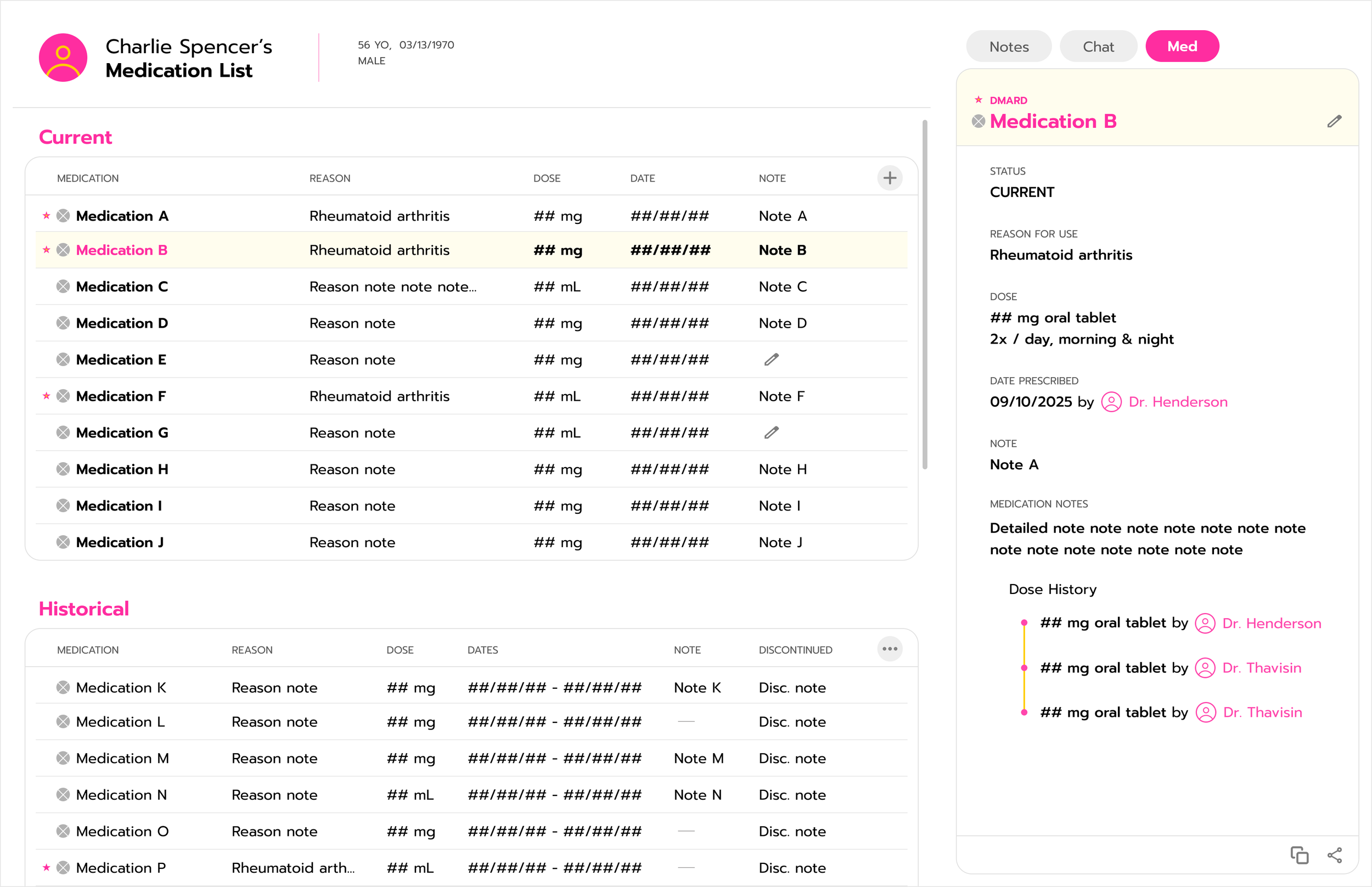
Main screen w/ a medication selected
Sharing Medication
Hover bubbles
Outcomes
Though the project have been put on pause once again on the development end, with the mockups and prototypes:
End-users expressed excitement, stating how the activity will alleviate their frustrations regarding DMARD tracking and medications overall, making their work day more pleasant and organized
Interest retainment in our users, where questions about project are still asked about time to time

Key takeaways
Working with(out) constraints
Luckily with our timeline, we were able to create a design without constraints in mind and found designing the solution that fit our users and hit the set goals more natural. This in turn made created the second version that fit the contraint straightforward as we based it off the “ideal”. Additionally, having created an Version A, it can still be referenced later on, possibly making the process of updating the review activity quicker.
Feedback beyond the end user
Since our rheumatologists are used to viewing dense medication paperwork for DMARD tracking, they preferred almost all content to be available on the screen without clicks or hovers. With this direction, the activity would have become very busy, not achieving one of our main goals of a simplified view. To get back on track, since the base idea of tracking does not require intensive clinical background, we conducted user interviews with our co-workers and other people in rheumatology clinics for fresh eyes. As a result, we gained further insight on making the review tool less dense and easier to process.
From the Lead Dev
⋆᪥⋆
From the Lead Dev ⋆᪥⋆
"Working with Nini on my current rheumatology project has been spectacular. It's very clear that she is thorough and puts a lot of thought into her work, as she alone has filled out 3-4 whole whiteboards across the 2 meetings we've had thus far, and she puts the end user at the forefront, writing down anything and everything that could benefit our end users. She has been very pleasant to work with, as she has been responsive, punctual, and willing to ask questions in order to completely understand what is required for this project."
software developer